

N4 postcode bulky rubbish collection advice for Finsbury Park
Posted on 06/08/2026
If you live in Finsbury Park and you are staring at an old sofa, a broken wardrobe, or a pile of flat-packed packaging that somehow turned into a mountain, you are not alone. N4 postcode bulky rubbish collection advice for Finsbury Park is really about making a messy job simple, safe, and properly planned. The good news? With the right approach, bulky waste does not need to become a weekend-long headache. In this guide, we will walk through how bulky rubbish collection works in practical terms, what to watch out for in a busy London neighbourhood, and how to choose the most sensible route for your home, flat, office, or renovation project.
Whether you are clearing one item or a full room, the trick is knowing what counts as bulky waste, what can be recycled, and when a professional collection saves you time and stress. Let's get into it.
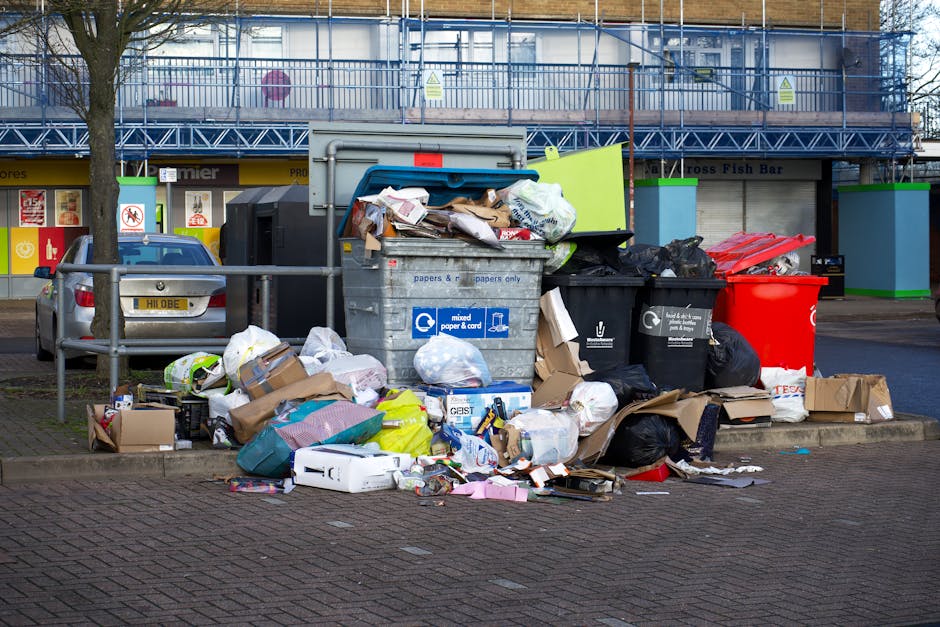
Why N4 postcode bulky rubbish collection advice for Finsbury Park Matters
Bulky waste is different from everyday household rubbish. A bin bag can be lifted in seconds, but a mattress, a cracked table, or a broken fridge takes planning. In N4, that planning matters even more because space is tight, access can be awkward, and pavements and stairwells are often shared. If you live in a Victorian conversion, a maisonette, or a top-floor flat, you already know the drill: if something is heavy, awkward, or awkwardly heavy, it is never just "a quick carry downstairs".
Good bulky rubbish collection advice helps you avoid the usual traps: blocking hallways, scratching walls, hurting your back, or leaving items out where they can be fly-tipped or damaged by weather. It also helps you decide whether your item is suitable for reuse, recycling, or disposal. That distinction matters. Truth be told, not every collection needs to be a waste problem. Sometimes it is a furniture-disposal job, sometimes a house-clearance situation, and sometimes just a badly timed life admin moment after a move or refurb.
Finsbury Park has its own rhythm too. You have busy roads, limited parking, and a mix of rented flats, owner-occupied homes, offices, and commercial premises. That means collection advice has to be practical, not theoretical. If you want a broader local view of the neighbourhood, the article on whether Finsbury Park is ideal for residents gives useful background, while the community profile for Finsbury Park helps explain why local services need to be flexible.
How N4 postcode bulky rubbish collection advice for Finsbury Park Works
At its core, bulky rubbish collection is about removing items that are too large, too heavy, or too awkward for normal household disposal. In practical terms, the process usually starts with identifying what you need gone, then sorting what can be reused or recycled, and finally choosing the most suitable collection method.
There are usually three broad routes:
- Local authority-style bulky item collection: often suitable for a limited number of items, but usually requires advance booking and careful adherence to item rules.
- Private collection service: more flexible for same-day or short-notice removals, mixed items, or jobs that need lifting from inside the property.
- Self-haul or van drop-off arrangement: only sensible if you have the right vehicle, help, and the time to handle loading safely.
In Finsbury Park, the private route often makes sense when access is tricky. If the item is on an upper floor, behind a narrow stairwell, or part of a bigger clear-out, having a team that can lift, sort, and load in one visit can be a relief. That is why services such as rubbish collection in Finsbury Park and waste clearance in Finsbury Park are often a better fit than trying to improvise with a car boot and a prayer.
The process usually looks like this:
- List the items and note size, weight, and whether they can be taken apart.
- Check for hazards such as broken glass, sharp edges, batteries, or liquids.
- Separate special materials like electricals, green waste, or reusable furniture where possible.
- Choose a collection method based on urgency, access, and how many items you have.
- Prepare access by clearing hallways, unlocking gates, and parking sensibly if needed.
- Confirm what will be removed so there are no surprises on the day.
That final step sounds obvious, but it is the one people skip most often. Then there is that awkward moment at the door when everyone realises the old bookcase was not, in fact, "one small item".
Key Benefits and Practical Advantages
Bulky rubbish collection is not just about getting rid of clutter. Done well, it solves several problems at once.
- It saves time: you avoid multiple trips, parking stress, and the slow grind of dismantling and shifting items alone.
- It reduces injury risk: lifting awkward furniture downstairs is a very common way to strain backs, wrists, and shoulders.
- It supports better recycling: a good collection service will separate materials where possible, rather than sending everything to landfill by default.
- It is better for shared buildings: flats and converted houses often need items removed quickly and cleanly to avoid obstructing communal areas.
- It helps with end-of-tenancy timing: when move-out day gets close, speed matters more than ever.
There is also a quieter benefit people do not mention enough: peace of mind. Once a bulky item is gone, the room feels different. Lighter. Easier to use. You notice the extra space straight away, even before the kettle has boiled.
If sustainability matters to you, it is worth reading about the company's approach to recycling and sustainability. A collection is only really efficient if it balances convenience with responsible handling.
Who This Is For and When It Makes Sense
This kind of advice is useful for a wide range of people. In Finsbury Park, that often includes:
- tenants leaving a flat and needing to remove unwanted furniture
- landlords between lets, especially where items were left behind
- homeowners refreshing a room or clearing a loft
- small business owners disposing of office furniture
- builders and tradespeople dealing with renovation waste
- families sorting out garage, shed, or garden clutter
It makes sense when the item is too large for normal bins, too heavy for one person, or too awkward to transport safely. A single mattress is one thing. Three wardrobes, a desk, and a load of packing material? Different story entirely.
For residents in flats, the common pain points are access and timing. If you are in a block near a busy road, you may need a collection that can work around neighbours, lift schedules, and parking realities. If that sounds familiar, the local notes in flat clearance and rubbish removal tips for Manor House can be surprisingly relevant, even if your exact street is a bit further over.
Step-by-Step Guidance
Here is a simple way to handle bulky rubbish without overcomplicating it.
- Do a quick room-by-room audit. Walk through the property and mark every item you want removed. It is easier to make decisions when you see the whole picture.
- Sort items into categories. Keep furniture, electricals, garden waste, and general bulky rubbish separate where possible.
- Check whether anything can be donated or reused. A sturdy chair with a worn seat may still have life left in it, while a water-damaged wardrobe probably does not.
- Measure the awkward pieces. Doorways, stair turns, and tight hallways matter more than people expect.
- Take photos if you need a quote. Clear pictures save time and help avoid misunderstandings.
- Book your collection with enough lead time. Same-day options exist in some situations, but they are best used when urgency genuinely matters.
- Prepare the access route. Move loose items, protect floors if needed, and make sure keys or entry codes are ready.
- Confirm the final load before removal. A quick check avoids last-minute confusion.
For larger mixed jobs, it can help to look at service pages such as house clearance in Finsbury Park or loft clearance in Finsbury Park. They are especially useful if the "bulky rubbish" is really the visible tip of a much larger clear-out.
A small but useful tip: keep one bag aside for screws, brackets, remote controls, and charger cables. Those tiny bits always vanish into the main pile, and then you find them months later in a coat pocket. Classic.
Expert Tips for Better Results
In our experience, the smoothest bulky collections come from preparation rather than brute force. A few small habits make a big difference.
- Break items down when it is safe to do so. A dismantled bed frame is easier to carry and often cheaper to remove than a fully assembled one.
- Keep reusable items separate. That helps with sorting and may improve the chance of recycling or rehoming.
- Watch for hidden hazards. Mattresses, old cabinets, and office units can contain nails, staples, or broken fixings.
- Plan around traffic and neighbours. In busier streets, a short loading window can be much easier than a long and noisy one.
- Tell the team about access issues upfront. Narrow stairs, basement steps, rear entrances, and no-lift buildings are normal in N4. Just say it plainly.
Also, if the job is linked to work on a building site, renovation, or shop refit, a specialist route may be better. For those cases, the page on builders waste disposal in Finsbury Park is worth a look. Builders' waste behaves differently from ordinary household clutter, and it should be handled that way.
If you are juggling several jobs at once, start with the biggest obstruction first. Once the large item goes, the rest often becomes strangely manageable. Funny how that works.

Common Mistakes to Avoid
Bulky rubbish collections often go wrong in very predictable ways. Avoiding these mistakes will save hassle.
- Leaving it too late. Rushing makes people accept the wrong service or the wrong timing.
- Mixing waste types without thinking. Not all items belong in the same pile. Electricals, garden waste, and metal may need different handling.
- Blocking shared areas. Hallways, front steps, and communal landings should stay clear.
- Forgetting parking and access. A collection can stall if the vehicle cannot get close enough.
- Assuming all items are equally recyclable. Some materials need separation or specialist processing.
- Underestimating item size. The item that "should fit fine" often does not. Not through the door, not around the corner, not with good intentions alone.
Another common issue is trying to dispose of too much in one go without a plan. If your room has turned into a staging ground, slow down. Walk through it with fresh eyes and decide what genuinely needs to go. It is often less than you think.
Tools, Resources and Recommendations
You do not need fancy equipment to manage bulky rubbish, but a few simple tools can make the process less painful.
- Measuring tape: useful for checking whether furniture can fit through doors or down stairs.
- Marker pen and labels: handy for marking items as keep, donate, recycle, or remove.
- Basic screwdriver or Allen key set: useful if safe dismantling is possible.
- Gloves: worth having if you are handling dusty, rough, or splintered items.
- Strong bags or boxes: useful for loose parts, fittings, and smaller broken materials.
For broader service context, the services overview is a sensible starting point if you are deciding between a single-item collection, a room clearance, or a bigger mixed-waste job. If you are weighing up timing and value, the pricing and quotes page can help you understand how estimates are usually approached.
And if you want to know a bit more about the company itself before booking, the about us page and insurance and safety information are both worth reading. That sort of reassurance matters when someone is coming into your home, especially if you have children, pets, or tight access.
Law, Compliance, Standards, or Best Practice
Bulky rubbish collection sits inside a wider duty of care. In plain English, that means waste should be handled responsibly, passed to a legitimate carrier, and not dumped where it can cause problems later. As a homeowner, landlord, tenant, or business owner, you should be careful about who removes your waste and where it goes. If waste is fly-tipped after collection by the wrong person, that can become a problem for everyone involved.
You do not need to become a legal expert to make good decisions, but you should follow a few best practices:
- Use a reputable service with clear collection terms.
- Keep an item list or basic record of what was removed.
- Be honest about any hazardous or awkward materials.
- Separate batteries, liquids, and sharp objects where appropriate.
- Do not leave items in communal spaces longer than necessary.
If you are clearing a property you manage, this is especially important. A landlord clearing after a tenancy has a practical responsibility to act quickly, but also carefully. The same goes for offices and shared buildings. A neat collection is one thing; a messy trail through the stairwell is another.
Where terms, payment, access, and collection conditions matter, it is sensible to review the provider's terms and conditions, payment and security details, and privacy policy. That is not glamorous reading, to be fair, but it is the boring stuff that protects the nice stuff.
Options, Methods, or Comparison Table
Choosing the right route depends on how much you need removed, how fast you need it gone, and how easy access is. Here is a simple comparison.
| Method | Best for | Pros | Watch out for |
|---|---|---|---|
| Local bulky item collection | Small number of items | Simple for basic needs, often straightforward | Less flexible, booking may be limited, item rules can be strict |
| Private bulky rubbish collection | Mixed or urgent jobs | Flexible timing, lifting included, faster for awkward access | Costs depend on load size and access |
| Self-removal | People with a van and help | Can work for simple, low-volume jobs | Heavy lifting, parking, time, and disposal responsibility all fall on you |
| Specialist clearance | Lofts, houses, offices, renovation waste | Best for larger or more complex clear-outs | Needs clear scope and good communication |
For many N4 households, private collection is the most practical middle ground. It is especially helpful if the item is inside the property, not outside on the curb, or if you have more than one thing to remove. If your job is leaning toward a bigger clean-out, see furniture disposal in Finsbury Park for furniture-heavy jobs, or office clearance in Finsbury Park if desks, chairs, and filing units are part of the picture.
Case Study or Real-World Example
A fairly typical Finsbury Park scenario goes like this. A couple in a second-floor flat decides to replace a sofa, two chairs, and a coffee table after a wet winter and one too many spills. The sofa is technically movable, but not safely by two people on a narrow staircase. They also have a chest of drawers that was meant to go to the charity shop but now has a broken base and two missing handles. In the hallway, there is packaging from the new furniture and a few old lamps waiting for a decision.
At first glance, it looks like a small job. In practice, it is awkward. The access is tight, the lift is unreliable, and the road outside is busier than it looks at 8 a.m. on a Tuesday. They sort the items into furniture, packaging, and small electricals, then book a collection that can handle the lot in one visit. The team arrives, checks the route, removes the items without dragging them across the floor, and loads them efficiently.
The biggest win was not just speed. It was not having to wrestle a sofa down the stairs while trying not to knock the wall paint off in strips. That bit alone is worth a lot, honestly.
For street-specific insight, local guides such as same-day rubbish removal on Seven Sisters Road and the Stroud Green Road rubbish clearance guide can help you think about access, timing, and street-level logistics in a more realistic way.
Practical Checklist
Use this quick checklist before your bulky rubbish collection.
- Have you listed every item that needs removing?
- Have you separated furniture, electricals, garden waste, and general junk?
- Have you checked for sharp edges, batteries, or liquids?
- Have you measured anything especially large or awkward?
- Is the access route clear from room to vehicle?
- Have you arranged parking or entry details if needed?
- Do you know which items can be recycled or reused?
- Have you confirmed the collection time and scope?
- Have you put aside anything you want to keep?
- Are communal areas protected and unobstructed?
If you are handling waste from outside space as well, the page on garden waste removal in Finsbury Park is a helpful companion piece. Garden cuttings, soil, and outdoor furniture raise different questions from indoor clutter, and it is better to split the job properly than muddle it together.
Conclusion
N4 postcode bulky rubbish collection advice for Finsbury Park comes down to three things: plan well, sort sensibly, and choose the right collection method for your space. That sounds simple, but it is usually the difference between a stressful clear-out and a smooth one. In a busy part of London, with flats, shared access, and limited parking, the details matter. Measure the awkward items, separate what can be reused, and be realistic about the lift, the stairs, and your own time.
Handled properly, bulky rubbish collection gives you back space, reduces risk, and makes a property feel usable again. Whether you are clearing a single sofa, an office load, or a whole room of old furniture, the right approach is always the one that is safe, clear, and practical. And yes, a little less clutter does make the whole place feel calmer. You notice it the minute you walk in.
Get a free quote today and see how much you can save.
And if all you do today is reclaim one corner of the room, that is still a good start. Small wins add up.

 Tipper Van - Junk Removal and Waste Clearance Prices in Finsbury Park, N4
 Luton Van - Junk Removal and Waste Clearance Prices in Finsbury Park, N4

